
Reduce Volumetric Weight with a Mailer Box Redesign: 22% Freight Saving Case Study
A growing e-commerce brand needed to reduce volumetric weight caused by an oversized corrugated mailer box. HS PACKFACTORY reviewed the packed product dimensions, insert layout, finished box height, corrugated flute, dieline, and master-carton arrangement. According to the project record, the revised packing plan reduced the customer’s freight cost by approximately 22% for the compared shipment.
The project was not solved by simply choosing thinner corrugated board or removing all internal clearance. The redesigned mailer still needed practical assembly space, stable product positioning, reliable closure, suitable panel stiffness, clean printing, and enough protection for normal e-commerce handling.
Exact product dimensions, carton dimensions, freight rates, and carrier agreements remain confidential. The 22% result is specific to this customer’s product, order quantity, packing plan, destination, and logistics calculation. It should not be treated as a guaranteed result for other packaging projects.
Quick Answer: How to Reduce Volumetric Weight
To reduce volumetric weight, packaging engineers usually review the final packed product dimensions, unused internal clearance, product orientation, insert structure, corrugated flute, board thickness, finished box dimensions, and master-carton packing density.
- Measure the packed product: Include the product, accessories, insert, protective materials, and required assembly clearance.
- Review empty space: Extra headroom or side clearance may increase dimensional weight without improving protection.
- Optimize the insert: A compact insert can control movement while allowing the outer mailer dimensions to be reduced.
- Confirm the corrugated structure: A slimmer flute may help, but the board must still match product weight and shipping risk.
- Audit the master carton: The smaller unit box should also improve outer-carton, pallet, warehouse, or fulfillment density.
Length × Width × Height ÷ Carrier Divisor
The divisor, unit of measurement, rounding method, and minimum charge should be confirmed with the courier, airline, freight forwarder, warehouse, or fulfillment provider used for the actual shipment.Project Background
The buyer was an e-commerce brand shipping a lightweight retail product to overseas customers and fulfillment locations. The existing printed corrugated mailer looked presentable, but its finished dimensions were larger than the packed product required.
Unused internal space increased the cube of each unit and reduced the number of packed units that could fit efficiently into the master cartons. The customer therefore needed more than a lower box unit price. They needed the mailer, insert, board structure, outer carton, and freight calculation reviewed together.
Reduce shipping volume and freight cost without changing the product, weakening normal parcel protection, creating difficult assembly, or lowering the printed brand presentation of the mailer box.
Project Constraints Before Reducing the Box Size
A smaller box is useful only when the revised structure can still be assembled, packed, closed, shipped, and reproduced consistently during mass production.
- Fixed product dimensions: The physical product and its essential accessories could not be reduced or changed.
- Protection requirement: The insert still needed to limit movement during normal e-commerce handling.
- Assembly clearance: Packing operators needed enough space to load the product without forcing the box or insert.
- Closure performance: The reduced structure could not create lid rebound, excessive pressure, or locking-tab failure.
- Artwork area: Branding, product information, warnings, and barcodes still needed to fit the revised dieline.
- Existing workflow: The new structure needed to remain practical for the customer’s packing and fulfillment process.
- Outer-carton limits: The revised shipment still needed to meet warehouse, handling, and carrier requirements.
Before vs. After the Structural Mailer Redesign
The project focused on removing avoidable space and improving the relationship between the packed product, insert, corrugated mailer, and master carton. Exact commercial dimensions remain customer-confidential.
| Review Point | Original Packaging | Redesigned Packaging |
|---|---|---|
| Internal clearance | Extra unused space around or above the packed product. | Clearance reduced to a practical assembly and protection allowance. |
| Insert layout | The product did not use the available internal area efficiently. | The insert followed the product orientation more closely. |
| Mailer profile | Finished box dimensions were larger than the packed product required. | Dimensions were revised around the approved packed configuration. |
| Corrugated structure | The existing board profile contributed to the overall packed cube. | A slimmer corrugated direction was reviewed while retaining practical stiffness. |
| Master-carton utilization | Lower packing density and more transported empty space. | Improved unit density under the revised outer-packing plan. |
| Freight result | Original shipment and freight-cost baseline. | Approximately 22% lower freight cost in the project comparison. |
The result did not come from one isolated change. It came from combining a smaller unit-package cube with a more efficient insert and improved master-carton arrangement.
Engineering Solution: Redesign the Complete Packing System
HS PACKFACTORY reviewed the mailer as part of a complete packing system instead of treating it as an isolated printed box.
1. Measure the Final Packed Configuration
The target dimensions were based on the product together with its accessories, insert, and required assembly clearance. This avoided developing the revised box around the bare product dimensions alone.
2. Reduce Unnecessary Headroom and Side Clearance
Space that did not support packing, protection, or product removal was identified as an opportunity for reduction. The goal was controlled clearance, not an excessively tight fit.
For EU regulatory preparation, use our PPWR empty-space evidence inputs for packaging redesign to keep this engineering case separate from the official Article 24 calculation methodology.
3. Reorganize the Insert Layout
The internal holding structure was reviewed so the product could sit in a more compact and stable orientation. Better positioning reduced unnecessary movement and allowed the surrounding mailer to follow the packed product more closely.

4. Review Corrugated Flute and Board Grade
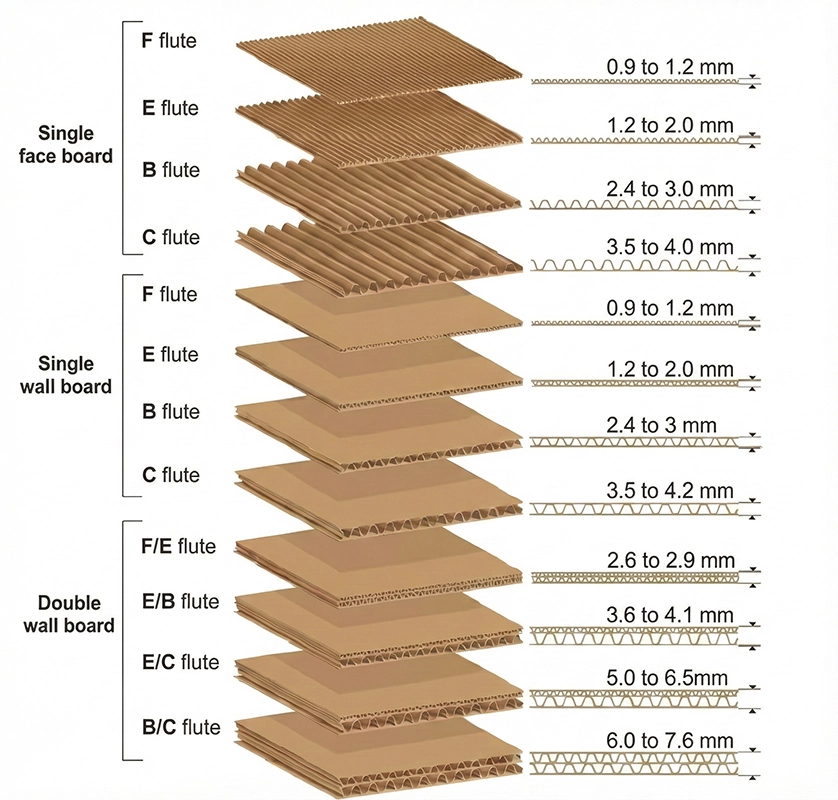
E-flute was reviewed because it offers a relatively slim profile and a smoother surface for printed e-commerce packaging. The final flute and paper combination still needed to match the product weight, panel stiffness, drop risk, stacking, and transport conditions.
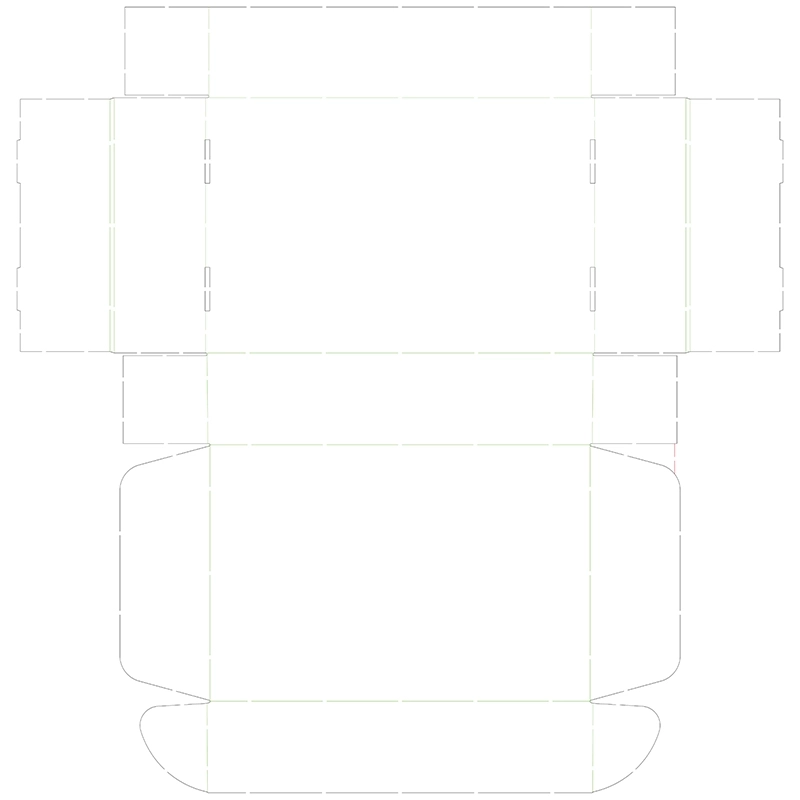
5. Revise the Production Dieline
Folding allowances, locking tabs, dust flaps, insert contact points, panel dimensions, and artwork positions were reviewed after the finished dimensions changed.
6. Recalculate Master-Carton Packing
The smaller mailer was evaluated together with the outer-carton loading direction and quantity. This helped ensure that reducing the individual box produced a useful logistics result rather than only a smaller-looking unit package.
A thinner flute alone does not guarantee lower freight cost. If the reduced structure creates product damage, panel collapse, extra cushioning, slower packing, or a larger master carton, the expected saving may disappear.
Sample Iteration Before Mass Production
The revised dieline was not released directly into bulk production. A physical structural sample was used to verify the actual packed dimensions and confirm that the reduction remained practical.
- Product loading: Confirm that the product could be inserted without forcing or damaging the mailer.
- Insert positioning: Check that the product remained stable without excessive movement or difficult removal.
- Surface contact: Review whether the tighter layout created rubbing, pressure marks, or abrasion.
- Folding and closure: Confirm that the panels folded correctly and the lid closed without excessive tension.
- Board behavior: Check panel stiffness, flute direction, edge condition, and visible deformation.
- Finished measurement: Measure the assembled and packed sample rather than relying only on theoretical dieline dimensions.
- Outer packing: Place the revised units into the proposed master-carton arrangement and confirm the loading direction.
Any structural changes identified during sampling were incorporated into the production dieline before artwork and mass-production approval.
Production Process
The project followed a controlled workflow so the volumetric-weight target did not conflict with product protection, artwork, production consistency, or export packing.
- Step 1: Collect project data — Review the product size, weight, accessories, current box, insert, quantity, destination, and shipping method.
- Step 2: Audit the existing structure — Identify unnecessary clearance, inefficient orientation, excessive profile, and outer-carton limitations.
- Step 3: Define the logistics target — Confirm whether the main objective is lower dimensional weight, lower CBM, improved pallet density, fewer master cartons, or lower freight cost.
- Step 4: Redesign the insert — Develop a more compact holding method without creating unacceptable movement, pressure, or removal difficulty.
- Step 5: Revise the mailer dieline — Adjust the finished dimensions, panels, fold lines, locking areas, and artwork positions.
- Step 6: Make a structural sample — Assemble the box with the real product or an accurate product sample.
- Step 7: Review master-carton packing — Confirm the unit count, loading direction, outer dimensions, pallet needs, and handling method.
- Step 8: Approve production files — Approve the dieline, material, artwork, sample, packing method, and inspection requirements.
- Step 9: Mass production and QC — Produce the mailers and inserts according to the approved specification.
- Step 10: Final packing verification — Measure the packed mailers and shipment cartons before dispatch.
Quality Control for the Reduced Mailer Structure
A smaller box is successful only when the mass-produced version remains consistent with the approved structural sample and shipment plan.
- Finished dimensions: Check the inner size, outer size, finished height, and folding allowance.
- Product fit: Verify the real product and accessories inside the approved insert and mailer.
- Insert movement: Confirm that the insert does not shift, collapse, lift, or release the product.
- Closure: Check locking tabs, lid tension, flap alignment, and closure stability after loading.
- Panel stiffness: Review board grade, flute direction, edge strength, and visible deformation.
- Surface contact: Check for product scuffing, compression marks, and insert pressure points.
- Printing and finishing: Confirm artwork alignment, color reference, logo position, barcode, coating, and surface appearance.
- Packing efficiency: Verify the approved quantity and loading direction inside the master carton.
- Master-carton measurement: Record the finished outer dimensions and actual packed weight used for logistics calculations.
- Handling tests: Complete suitable drop, compression, vibration, stacking, or shipment tests according to the project risk.
Project Results: Reducing Volumetric Weight and Freight Cost
The approved redesign reduced unnecessary internal space, improved the relationship between the product and insert, and increased packing efficiency under the revised shipment plan.
The result was based on the customer’s comparison of the original and revised packing plans. It is not a guaranteed saving for unrelated products, destinations, quantities, carriers, or freight agreements.
How the Result Was Evaluated
- Measure the original finished unit-package dimensions.
- Measure the redesigned finished unit-package dimensions.
- Calculate unit-package volume or dimensional weight using the applicable carrier rule.
- Confirm the number of units packed into each master carton.
- Measure the finished master-carton dimensions and actual packed weight.
- Compare the number of master cartons, pallets, or shipment cubic volume required.
- Compare freight costs for the same shipment quantity, destination, and transport conditions.
Project Outcomes
- The mailer dimensions were revised around the approved packed product rather than the oversized original structure.
- The insert used the available internal space more efficiently and reduced unnecessary movement.
- A slimmer corrugated direction was reviewed without ignoring panel stiffness or shipping risk.
- The revised dieline was physically sampled before mass-production approval.
- Master-carton utilization improved under the revised packing plan.
- The customer’s project comparison recorded an approximately 22% reduction in freight cost.
Unit-box volume reduction, dimensional-weight reduction, master-carton reduction, shipment-CBM reduction, and final freight-cost reduction are different measurements. They should not be presented as interchangeable unless the logistics calculation confirms the relationship.
Buyer Takeaways from This Packaging Redesign
- Measure the final packed product: Include accessories, inserts, protective materials, and assembly clearance.
- Confirm the logistics rule first: Use the divisor, rounding method, minimum charge, CBM rule, or pallet limit from the actual provider.
- Optimize more than the unit box: Review the insert, master carton, pallet, fulfillment workflow, and warehouse restrictions together.
- Do not remove all clearance: An overly tight box can create abrasion, pressure, difficult assembly, or closure failure.
- Recheck artwork: A revised dieline usually changes panel dimensions, fold positions, bleed, and finishing registration.
- Approve a real structural sample: Theoretical dimensions alone cannot confirm fit, closure, removal, or packed measurements.
- Compare total landed cost: Include packaging cost, labor, damage risk, storage, master cartons, and freight.
Best Fit / Not Recommended
Best Fit For
- Lightweight products with obvious empty space inside the current package.
- E-commerce accessories, toys, consumer electronics accessories, and subscription products.
- Stable rectangular products that can use a compact insert.
- Brands currently using oversized standard mailer boxes.
- Repeat orders where recurring freight savings can justify structural development.
- Projects where master-carton or fulfillment density can also be improved.
Not Recommended For
- Fragile products that require large cushioning distances.
- Heavy products that need thicker corrugated board or stronger shipping structures.
- Irregular products without a reliable positioning method.
- Products with retailer-mandated outer dimensions that cannot be changed.
- Very small one-time orders where development cost exceeds likely freight savings.
- Projects where reduced clearance causes pressure, abrasion, ventilation, or heat risks.
Production Before Approval Checklist
Confirm the following information before releasing a reduced mailer box into mass production.
- Product data: Actual dimensions, weight, accessories, fragile areas, pressure-sensitive surfaces, and packing orientation.
- Original packaging: Existing inner and outer dimensions, dieline, insert layout, material, and current shipping issue.
- Revised specification: New finished dimensions, folding allowance, locking structure, corrugated flute, and board grade.
- Insert: Material, thickness, cavity dimensions, product clearance, removal method, and movement tolerance.
- Artwork: Revised dieline placement, bleed, fold safety, barcode, text, colors, and finishing positions.
- Sample approval: Blank structural sample, printed sample when required, real-product fit, closure, and written approval.
- Testing: Suitable drop, vibration, compression, stacking, abrasion, or shipment test according to project risk.
- Master carton: Unit quantity, loading direction, outer dimensions, actual weight, board strength, and internal protection.
- Logistics: Destination, transport method, carrier divisor, CBM rule, rounding method, and pallet limits.
- Commercial comparison: Box cost, insert cost, packing labor, shipment quantity, storage, and freight cost.
Reduce Volumetric Weight FAQ
How is volumetric weight calculated?
Volumetric weight is commonly calculated by multiplying the finished package length, width, and height and dividing the result by the carrier’s volumetric divisor. The divisor, measurement unit, rounding method, and minimum charge vary by courier, airline, freight forwarder, region, and service.
Does reducing box volume always reduce freight cost?
No. Final freight cost also depends on actual weight, carrier rules, destination, shipment quantity, fuel surcharges, minimum charges, master-carton dimensions, pallet utilization, and transport method. A smaller unit box is useful only when the complete shipment calculation improves.
Can a smaller mailer box still protect the product?
Yes, when the structure is redesigned and sampled correctly. The insert must control movement, the corrugated board must provide suitable stiffness, the product must not be compressed, and the finished package should complete any required handling or shipping tests.
How do custom inserts help reduce volumetric weight?
A well-designed insert can position the product more efficiently, reduce movement, organize accessories, and remove unnecessary clearance. The insert should be tested with the real product because an overly tight layout can create pressure, abrasion, or difficult removal.
Which corrugated flute is suitable for a slim mailer box?
E-flute or another slim corrugated structure may be suitable for some lightweight e-commerce mailers, but the final choice depends on product weight, board grade, drop risk, stacking, printing, panel stiffness, and shipping route. The thinnest flute is not automatically the safest or lowest-cost option.
What tests should be completed before mass production?
Testing may include product-fit, insert-movement, folding, closure, panel-stiffness, abrasion, drop, vibration, compression, master-carton loading, and finished-package measurement. The test plan should match the product value, fragility, shipping route, and buyer requirements.
What information is needed to reduce volumetric weight?
Please provide the product dimensions and weight, accessories, current box dimensions, current dieline, insert layout, order quantity, shipping method, destination, current freight issue, and any carrier or warehouse restrictions. Photos, samples, and freight records can improve the review.
Can HS PACKFACTORY revise an existing mailer dieline?
Yes. For suitable projects, our packaging engineers can review the current structure and prepare or adjust a production dieline. A structural sample should be approved with the real product before mass production.