
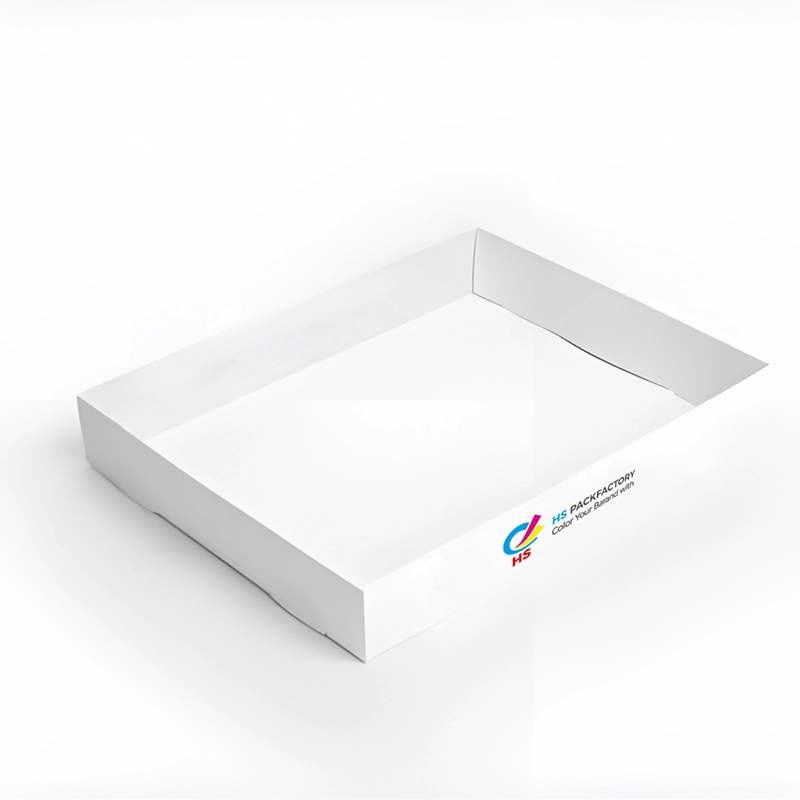
Custom Roll End Trays for Heavy-Duty Glue-Free Packaging
SKU: HS-FC030
Custom roll end trays are glue-free open-top trays with roll-over side walls and friction-locking tabs. They are used when buyers need stronger tray support, flat-packed shipping, and manual assembly without factory glue.
This structure is suitable for automotive parts, industrial hardware, tools, replacement parts, jars, bakery assortments, cookies, pastries, food gift sets, corporate gift hampers, retail bundles, premium kits, and tray-and-sleeve packaging sets.
- Project-specific structure
- Material and artwork review
- Sample approval
- Quotation-based supply
Quick Answer
Custom roll end trays are glue-free open-top trays with roll-over side walls and friction-locking tabs. They are used when buyers need stronger tray support, flat-packed shipping, and manual assembly without factory glue.
Key Facts for B2B Buyers
Product role
Custom roll end trays are glue-free open-top trays with roll-over side walls and friction-locking tabs. They are used when buyers need stronger tray support, flat-packed shipping, and manual assembly without factory glue.
Critical inputs
Product dimensions and weight, structure, material, artwork, quantity, packing workflow and destination.
Project boundary
No fixed performance, material, certification, environmental or commercial result is assumed before project review.
Approval focus
Fit, assembly, print, finish, packing, route and agreed evidence are confirmed on the approved sample.
Project Specification Directions
| Box Style | Roll end tray / open-top self-locking tray / glue-free corrugated tray. |
|---|---|
| Assembly Method | Manual fold with friction-locking tabs, no factory glue required. |
| Tray Dimensions | Custom inner size, tray depth, side wall height, front wall height, and display profile based on product size and handling needs. |
| Material Options | E-flute corrugated board, B-flute corrugated board, C-flute corrugated board, high-GSM kraft board, and custom printed corrugated board. |
| Load Support | Depends on flute type, board thickness, tray size, side wall height, tab tolerance, product weight, and stacking height. |
| Printing Options | CMYK litho-laminated printing, flexographic printing, inside printing, outside printing, and custom logo printing. |
| Structural Pairings | Separate lid, clear PET lid, custom packaging sleeve, die-cut dividers, interlocking grid inserts, or product separators. |
| Food Packaging Review | Bakery or food tray projects should confirm whether the tray directly touches food, uses a liner, or only works as secondary packaging. |
| MOQ and timing | Confirmed by quotation after specifications, materials, artwork, quantity, packing and destination are defined |
Planning and Customization Review
Structural Configurations
Adapt the tray to your product weight, packing method, retail presentation, and display needs.
Structural Configurations
Adapt the tray to your product weight, packing method, retail presentation, and display needs.
Printing and Finish Options
Choose the look and surface protection based on your brand, product category, and handling conditions.
Auto Parts and Hardware
Suitable for metal components, tools, replacement parts, hardware kits, automotive accessories, and industrial product sets that need stronger tray support.
Is This Direction Right for Your Project?
Good Candidates for Review
Products with defined support, retention, removal, outer-box fit and packing requirements.
Review Another Direction When Needed
Projects lacking a stable product reference, support plan, material route or representative approval sample.
Material, Performance and Claim Boundaries
No material, environmental, food-contact, barrier, load, adhesion or route performance is assumed from the product name alone. The selected construction, supplier evidence, sample, test scope and destination requirements must be confirmed for the project.
Artwork, Sampling and Production Approval
- Define the pack: Send product, size, weight, orientation, artwork, quantity, packing and destination.
- Confirm the direction: Review structure, materials, print, finish and evidence requirements.
- Approve files: Confirm dieline, artwork placement, copy, color and production notes.
- Approve the sample: Check fit, assembly, appearance, packing and the agreed test scope.
- Release production: Confirm quotation, approved references, QC points, packing and shipment.
Quality and Packing Checks
- Dimensions, fit, orientation and assembly against the approved sample
- Material, structure, print, color and finish against approved references
- Edges, folds, seams, locks, adhesive or retention features where applicable
- Product loading, removal, pack-out and handling workflow
- Unit packing, carton count, pallet direction and route protection
- Required documents and agreed evidence scope before shipment
What to Send for an RFQ
- Product dimensions, weight, photos or drawings
- Required structure, use, opening, loading and packing workflow
- Material, print, finish, insert, window or accessory direction
- Artwork files and any market, evidence or test requirements
- Quantity, unit packing, carton or pallet expectations
- Destination, schedule target and sample approval needs
Frequently Asked Questions
What should be checked before approving a custom roll end tray sample?
Buyers should check product size, product weight, tray inner size, tray depth, side wall height, board thickness, flute type, paper surface, stacking requirement, friction-lock tab tolerance, slot width, fold line position, divider need, sleeve or lid requirement, food liner need, print coverage, crease cracking risk, flat-packed carton count, master carton strength, and destination country.
What are custom roll end trays used for?
Custom roll end trays are used for automotive parts, industrial hardware, tools, replacement parts, metal components, jars, bakery assortments, cookies, pastries, food gift sets, corporate gift hampers, retail bundles, premium kits, sample trays, shelf-ready trays, tray-and-sleeve packaging, and tray-and-lid packaging.
Why is it called a roll end tray?
The name comes from the assembly method. The side panels roll over and lock into the base to create reinforced tray walls.
Is a roll end tray strong enough for heavy metal parts?
Yes, when the right corrugated board and tray structure are selected.
How do I choose E-flute, B-flute, C-flute, or high-GSM kraft board?
E-flute is suitable for lighter retail trays and cleaner printed surfaces. B-flute is better for heavier products and stronger stacking support. C-flute can be used for larger or heavy-duty industrial trays. High-GSM kraft board can work for rugged, natural, and glue-free tray packaging.
How should side wall height and tray depth be selected?
Tray depth and side wall height should be selected based on product height, product visibility, hand access, stacking requirement, sleeve fit, lid fit, and display use.
What should be checked for friction-locking tabs?
Tab size, slot width, tab tolerance, board thickness, fold direction, wall tension, and repeated folding should be checked during sampling.
Does a roll end tray arrive pre-glued?
No. This structure is designed to ship flat and assemble by hand with friction-locking tabs.
Can you manufacture a matching lid or sleeve for this tray?
Yes. We can manufacture a separate telescoping lid, clear PET lid, paper lid, or custom packaging sleeve for a tray-and-cover packaging set.
Can roll end trays be used for bakery or food packaging?
Yes, roll end trays can be used for bakery assortments, cookies, pastries, food gift sets, and secondary food packaging.
Do I need a liner for direct food contact?
If the tray directly touches food, a suitable food liner, inner wrap, bag, or food-contact material review may be needed.
Can roll end trays include dividers or inserts?
Yes. Roll end trays can include die-cut dividers, interlocking grid inserts, paperboard dividers, corrugated dividers, product separators, or custom inserts.
What should be checked for crease cracking and fold line stress?
Heavy ink coverage, litho-lamination, thick board, aqueous coating, lamination, and repeated manual folding can increase visible cracking on fold lines or locking tabs.
How are flat-packed roll end trays packed for export?
Roll end trays are usually counted, stacked flat, protected, and packed into master cartons.
Can FSC-related paper and material documents be checked?
Documentation or certification scope must be confirmed for the selected material, supplier, production route, intended use and destination.
What information do you need for a quote?
Please send your product size, product weight, number of items per tray, tray depth, stacking requirement, sleeve or lid need, divider need, food liner need, artwork file, quantity, packing method, and delivery country.
Related Products and Planning Resources
Plan Your Custom Roll End Trays for Heavy-Duty Glue-Free Packaging Project
Send product, specification, artwork, quantity, packing and destination details for a project-specific review and quotation.