
Oversized Corrugated Color Box Production for Large Retail Products
A retail brand needed an oversized corrugated color box for a large product that required both structural support and full-color shelf presentation. A standard folding carton was not strong enough, while a basic corrugated shipping carton could not deliver the printed retail appearance the brand needed.
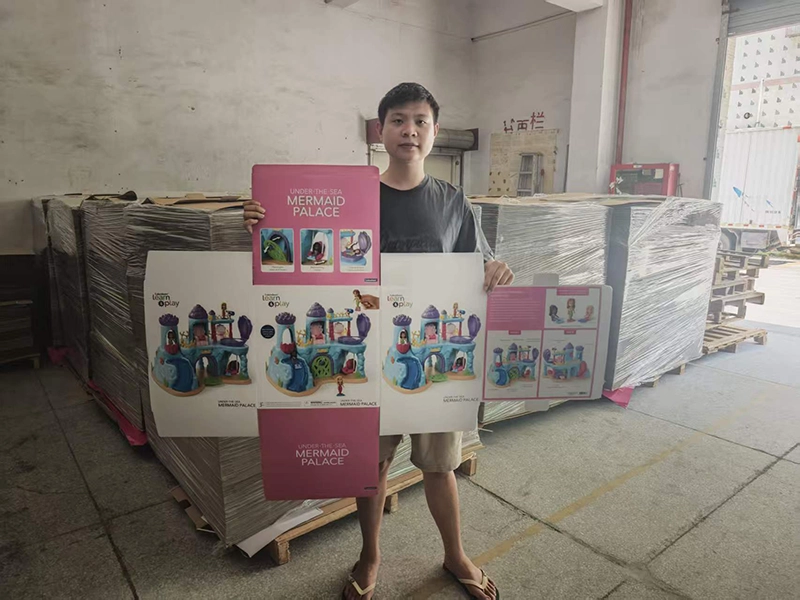
HS PACKFACTORY helped the buyer develop a laminated corrugated color box using printed surface paper mounted onto corrugated board. The project focused on large-format printing, lamination flatness, crease stability, die-cutting accuracy, clean folding edges, and export-ready packing.
Quick Answer
Oversized corrugated color boxes are large printed packaging boxes made by laminating full-color printed paper onto corrugated board. They are used when a product needs a larger size, stronger structure, and better retail presentation than a standard folding carton.
- Best for: Large retail products, toys, appliances, gift sets, promotional packaging, display products, and shelf-ready oversized packaging.
- Common board options: E-flute, F-flute, B-flute, C-flute, or BC double-wall corrugated board depending on product size, weight, and stacking requirement.
- Surface options: CMYK printing, Pantone colors, matte lamination, gloss lamination, Spot UV, foil stamping, embossing, or anti-scratch film when suitable.
- Key production risks: Printing alignment, lamination bubbles, surface paper cracking, crease depth, die-cutting tolerance, box forming stability, and export packing protection.
Project Background
The buyer was developing packaging for a large retail product. The packaging needed to look professional on shelves, carry full-color brand graphics, and maintain a stable shape after folding, assembly, and shipping.
A normal paperboard folding carton could not provide enough panel stiffness for the product size. A standard corrugated shipping carton was strong enough for transport, but it looked too basic for the buyer’s retail display requirement.
The customer needed an oversized corrugated color box with stronger structure, full-color printed branding, clean folding edges, accurate panel alignment, and a retail-ready appearance.
Buyer Constraints
The project was not simply about making a larger box. The buyer needed size, structure, presentation, and shipping control to work together.
- Large product size: The box dimensions were outside the practical range of many standard folding cartons.
- Retail display requirement: The box needed full-color graphics and a cleaner shelf appearance, not only transport protection.
- Surface quality: The printed paper had to stay flat after lamination without bubbles, wrinkles, or visible shifting.
- Folding stability: Creasing needed to support clean folding without cracking the printed surface paper.
- Box forming: Large panels had to align correctly after folding, closing, and assembly.
- Export handling: Packing method, carton volume, edge protection, and shipment handling had to be considered before mass production.
Why Standard Folding Cartons Were Not Enough
Standard folding cartons are suitable for many retail products, but oversized packaging creates extra pressure on board stiffness, crease quality, panel flatness, and shipping protection.
- Panel bending risk: Large paperboard panels may bend or collapse if the board caliper is not strong enough.
- Product weight risk: Heavier products may require corrugated support instead of ordinary SBS, C1S, or ivory board.
- Crease cracking risk: Full-color artwork on large folding panels can crack near fold lines if the material and crease depth are not controlled.
- Stacking risk: Oversized paperboard cartons may deform during warehouse handling, export packing, or transportation.
Why Regular Shipping Cartons Were Not Enough
A normal corrugated shipping box can protect products during transport, but it is usually not designed for high-quality retail graphics or shelf presentation.
- Print detail: Basic flexo-printed shipping cartons may not deliver the same color detail as offset printed surface paper.
- Retail appearance: Retail packaging often needs sharper product photos, cleaner logos, and stronger shelf impact.
- Surface finishing: Matte lamination, gloss lamination, Spot UV, foil stamping, and anti-scratch film are easier to control on printed surface paper.
- Brand presentation: Laminated corrugated color boxes combine corrugated board strength with printed paper surface quality.
Packaging Challenge
Large corrugated color boxes are more difficult to control than small printed cartons. The printed surface is wider, the laminated paper must stay flat, and the box must fold correctly without cracking, bubbling, edge lifting, or panel distortion.
Main Challenges
- Large format printing: The artwork needed accurate color reproduction across a wide printed surface.
- Lamination flatness: Printed art paper had to be mounted onto corrugated board without bubbles, wrinkles, glue marks, or misalignment.
- Creasing stability: Large panels needed clean folding lines to reduce cracking, surface tearing, or uneven corners.
- Box forming accuracy: The oversized box had to close neatly and maintain a stable retail-ready shape.
- Visual presentation: The final box needed to look like branded retail packaging, not a basic shipping carton.
Engineering Decision: Laminated Corrugated Color Box
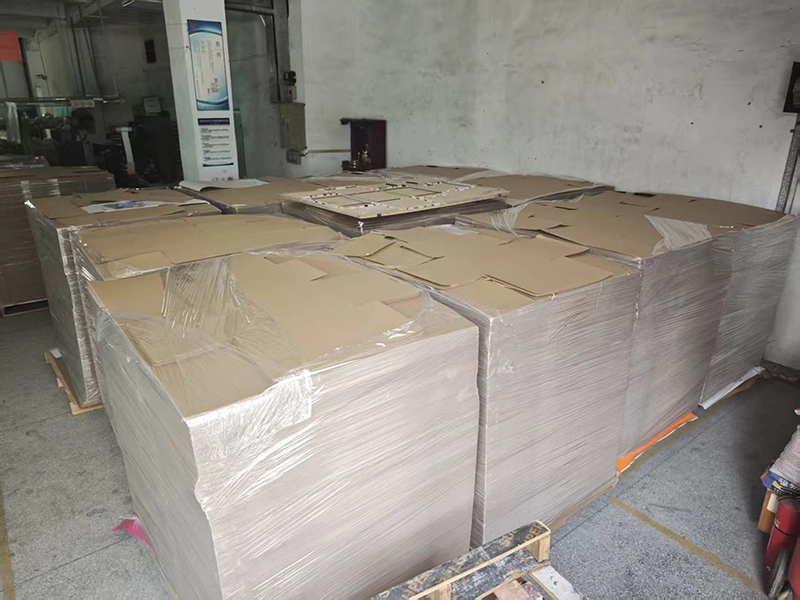
HS PACKFACTORY recommended a laminated corrugated color box because the project needed both structural strength and print quality. The printed surface paper provided retail graphics, while the corrugated board provided panel stiffness and better forming support.
- Printed surface paper: Used for sharper color, cleaner brand graphics, product information, and retail presentation.
- Corrugated board: Used to increase panel stiffness and support larger box dimensions.
- Controlled lamination: Used to keep printed paper aligned and flat on the corrugated board.
- Adjusted crease depth: Used to improve folding performance after paper-to-board lamination.
- Sample assembly: Used to check closure fit, edge folding, and box forming before mass production.
For oversized corrugated color boxes, visual quality and structural control must be developed together. A strong board alone is not enough if the printed surface cracks, bubbles, or folds poorly.
Corrugated Board and Performance Decisions
Board selection affects box thickness, panel stiffness, print appearance, stacking strength, shipping protection, and final packing volume.
Flute and Structure Options
- E-flute / F-flute: Often used when the box needs a finer retail appearance, lower thickness, and cleaner laminated surface.
- B-flute: Useful when the box needs stronger cushioning and better panel support for larger or heavier retail products.
- C-flute: Can be reviewed when cushioning and shipping protection are more important than a thin retail profile.
- BC-flute / double-wall board: Suitable when the product is larger, heavier, or needs stronger stacking support.
- ECT / BCT review: Compression performance can be reviewed when boxes need to support stacking, warehousing, pallet loading, or export handling.
- Inner support: Paperboard inserts, corrugated dividers, foam inserts, or molded pulp inserts may be used when the product needs internal positioning.
- Export packing: Master carton, corner protection, pallet packing, or flat / bundled packing should be confirmed before shipment.
Sample Adjustment Before Mass Production
During sample assembly, our team checked panel alignment, closure fit, crease depth, flap depth, laminated surface flatness, and edge folding performance. For oversized corrugated color boxes, small dieline or crease adjustments can make a visible difference in final box forming.
- Crease depth: Adjusted to reduce surface cracking and improve fold-line stability.
- Flap depth: Reviewed for closure fit, assembly speed, and final box shape.
- Panel alignment: Checked after folding to confirm that the large panels met correctly.
- Laminated edge: Checked for lifting, cracking, glue marks, or paper separation.
- Packing direction: Reviewed before mass production to reduce handling damage and export packing problems.
Production Process
The project followed a production workflow designed for large-format printed corrugated packaging. Each step was checked to reduce the risk of color deviation, lamination issues, crease cracking, and folding defects.
Step-by-Step Workflow
- Step 1: Size and structure review — The buyer provided product dimensions, product weight, display requirements, and preferred box style.
- Step 2: Dieline engineering — Our team prepared a custom dieline based on box size, folding direction, flap depth, closure method, and assembly process.
- Step 3: Artwork preflight — The artwork was checked for bleed, resolution, color mode, text outlines, image quality, and print-safe margins.
- Step 4: Surface paper printing — Full-color graphics were printed on surface paper before mounting.
- Step 5: Paper-to-board lamination — Printed paper was laminated onto corrugated board with alignment and flatness control.
- Step 6: Die-cutting and creasing — The laminated corrugated sheet was die-cut and creased according to the final dieline.
- Step 7: Sample assembly — A physical sample was assembled to check shape, closure, folding edges, and retail appearance.
- Step 8: Mass production — Bulk production started after sample, artwork, material, finish, and packing method approval.
Quality Control
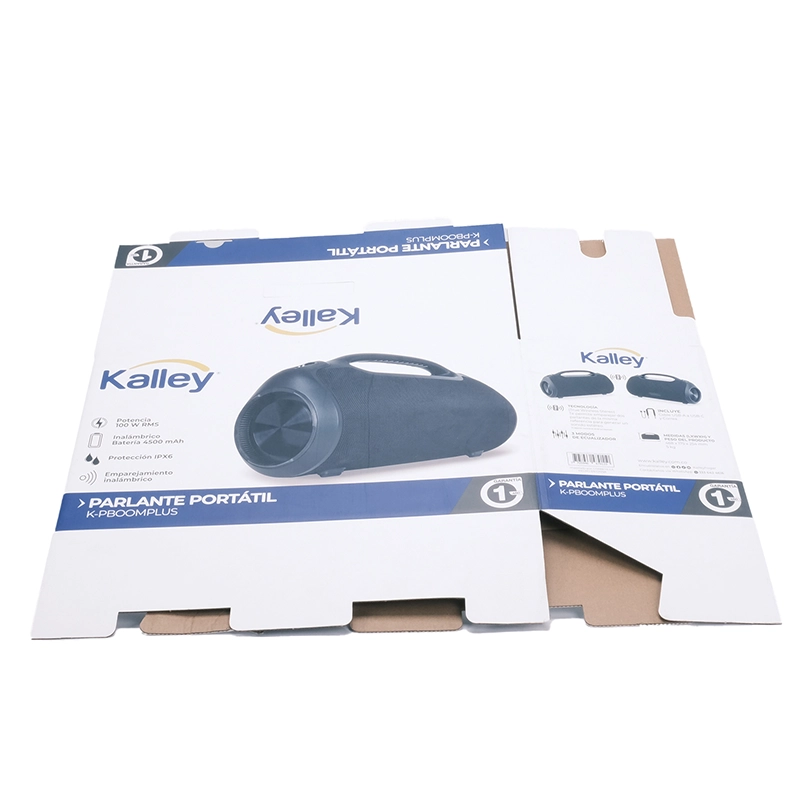
Quality control focused on both appearance and structure. Since this was a large printed corrugated color box, the production team checked color accuracy, lamination quality, crease performance, box forming, insert fit, and final packing.
QC Checkpoints
- Artwork check: Confirm bleed, safe margins, color mode, image resolution, barcode clarity, and outlined fonts.
- Printing check: Check color consistency, logo position, product image quality, and full-surface artwork alignment.
- Lamination check: Inspect for bubbles, wrinkles, glue marks, uneven mounting, edge lifting, and paper shifting.
- Die-cutting check: Confirm cutting accuracy, slot position, flap depth, panel dimensions, and closure tolerance.
- Creasing check: Test folding lines to reduce cracking, surface tearing, uneven corners, or poor forming.
- Assembly check: Assemble the box to confirm closure, shape stability, edge alignment, and display appearance.
- Packing check: Review bundling, carton packing, outer protection, pallet planning, and export handling risk before shipment.
Production Before Approval Checklist
Before mass production, the buyer and factory team should confirm the key details that affect size control, material strength, print quality, folding performance, and export packing.
- Product details: Product size, product weight, product shape, fragile points, and retail display direction.
- Box structure: Final inner size, box style, flap depth, closure method, folding direction, and assembly method.
- Corrugated board: E-flute, F-flute, B-flute, C-flute, BC-flute, single-wall or double-wall requirement.
- Printed surface: Surface paper type, print color reference, image resolution, barcode position, and brand graphics.
- Finishing: Matte lamination, gloss lamination, Spot UV, foil stamping, embossing, anti-scratch film, or other finish requirements.
- Production tolerance: Lamination alignment, die-cutting tolerance, crease depth, folding edge, and closure fit.
- Protection plan: Insert, divider, corner protection, inner packing, master carton, pallet requirement, and shipping destination.
When This Structure Makes Sense
Laminated oversized corrugated color boxes are useful when a project needs both printed retail appearance and stronger corrugated structure.
Best Fit For
- Large retail products: Products too large or heavy for standard paperboard folding cartons.
- Gift sets and promotional products: Packaging that needs stronger panels and full-color retail graphics.
- Toys and appliances: Large products requiring better stiffness, cleaner printing, and stronger box forming.
- Shelf-ready packaging: Projects where ordinary shipping cartons look too basic for retail display.
- Offset printed corrugated boxes: Projects that need sharper printed graphics on a corrugated structure.
Not Recommended For
- Shipping-only cartons: Low-cost transport cartons with no retail display requirement.
- Very small products: Projects that a standard folding carton can handle more efficiently.
- Industrial transport only: Very heavy products that need industrial protection rather than printed retail display.
- Low print requirement: Projects where laminated printed surface paper is not necessary.
- High compression requirement without packing plan: Products needing strong stacking performance without separate export carton or pallet planning.
Final Results
After sample confirmation and production adjustment, the buyer received oversized corrugated color boxes that combined large-format structure with a cleaner retail packaging appearance.
The final packaging looked more professional than a standard corrugated carton and provided better structural support than an ordinary large paperboard folding box.
Project Outcomes
- Custom oversized corrugated color box structure confirmed before mass production.
- Improved printed brand presentation for large retail products.
- Better folding stability through adjusted crease depth and panel layout.
- Cleaner lamination surface with reduced risk of bubbles and misalignment.
- More professional packaging appearance compared with ordinary shipping cartons.
- Factory-direct production helped simplify communication and improve production consistency.
The project helped the buyer turn a large-format packaging challenge into a production-ready oversized corrugated color box with stronger structure and better retail presentation.
Buyer Takeaways from This Case
This case shows why oversized retail packaging should be reviewed as both a structural project and a printing project.
- Do not judge oversized packaging by appearance alone. Large panels need stiffness, accurate creasing, and stable box forming.
- Review print and structure together. Corrugated board strength, printed surface paper, lamination flatness, and crease depth must work together.
- Build and test a sample before mass production. Folding edges, closure fit, and panel alignment are easier to correct before bulk production.
- Preflight artwork early. Large-format artwork needs early review for resolution, bleed, color mode, barcode clarity, and alignment.
- Plan export packing before production. Oversized boxes affect carton volume, storage, handling risk, and shipping protection.
Oversized Corrugated Color Box FAQ
What is an oversized corrugated color box?
An oversized corrugated color box is a large printed packaging box made by mounting full-color printed paper onto corrugated board. It is used when a product needs both stronger structure and better retail presentation than a standard paperboard carton.
When should I choose a corrugated color box instead of a folding carton?
You should consider a corrugated color box when the product is too large or heavy for standard paperboard, when the panels need more stiffness, or when the packaging needs both retail graphics and stronger structural support.
How is a corrugated color box different from a shipping carton?
A shipping carton is mainly designed for transportation and protection. A corrugated color box combines structural support with printed branding, surface finishing, and retail-ready appearance. It is more suitable for display packaging, promotional packaging, and branded large product packaging.
What flute type should I choose for an oversized corrugated color box?
E-flute or F-flute is often used when the project needs a cleaner printed surface and lower thickness. B-flute, C-flute, or BC double-wall board may be reviewed when the product is larger, heavier, or needs stronger stacking support.
Can you add matte lamination, Spot UV, or foil stamping?
Yes. Corrugated color boxes can support matte lamination, gloss lamination, Spot UV, foil stamping, embossing, debossing, and anti-scratch film when the structure and surface paper are suitable for the selected finish.
How do you control lamination bubbles and crease cracking?
We review surface paper, corrugated board, lamination alignment, glue control, die-cutting tolerance, crease depth, and sample folding before mass production. A physical sample helps confirm whether the laminated surface folds cleanly.
Do oversized corrugated color boxes need inserts or export cartons?
Many oversized packaging projects need paperboard inserts, corrugated dividers, foam inserts, corner protection, master cartons, or pallet planning. The best packing method depends on product weight, shape, fragility, shipping route, and warehouse handling.
What information is needed for a quote?
Please provide product size, product weight, box dimensions, box structure, flute preference if known, order quantity, artwork, printing requirements, finishing options, insert requirement, packing method, and delivery country.